As Amazon Associates, we earn from qualifying purchases. This means we may receive a small commission at no extra cost to you if you click through and make a purchase.
The Raspberry Pi HQ Camera is an external 12.3-megapixel imaging module designed to bring interchangeable optics and RAW image capture to single-board computing setups. Engineered around a premium CMOS sensor, this unit moves past the fixed-focus pinhole designs of entry-level camera boards to deliver genuine photographic flexibility. Our verdict is that it represents an exceptional, durable imaging investment for tinkerers, STEM educators, and hobbyist households who want to learn photography fundamentals, explore computer vision, or construct dedicated DIY camera rigs from scratch.
This imaging module suits families building STEM science fair experiments, hobbyists designing custom time-lapse gear, and student programmers wanting full control over exposure settings and lens choices. However, households searching for a weatherproof, plug-and-play home security device or an out-of-the-box streaming webcam with an integrated lens should look toward turnkey commercial cameras instead, as this bare module requires assembly, manual optical tuning, and a host computing board.
Raspberry Pi HQ Camera at a Glance

| Feature | Specification |
|---|---|
| Sensor Model | Sony IMX477R CMOS |
| Still Resolution | 12.3 Megapixels (4056 x 3040 pixels) |
| Sensor Dimensions | 7.9 mm diagonal with square pixels |
| Output Formats | RAW12, RAW10, RAW8, COMP8 |
| Video Capture Resolution | 1080p, 4056 x 3040 |
| Lens Mount Compatibility | C-mount and CS-mount (C-to-CS adaptor included) |
| Focus & Zoom Adjustment | Manual focus, adjustable back focus length, manual zoom |
| Tripod Mounting Socket | Integrated 1/4″-20 standard tripod thread |
| Physical Dimensions | 1.18″ D x 1.38″ W x 1.38″ H |
| Board Compatibility | Raspberry Pi Zero, Pi 2 Model B, Pi 3 Model B/B+, Pi 4 Model B |
| Operating Temperature | 32°F to 122°F |
Optical Flexibility and Lens Compatibility
The defining strength of this imaging hardware lies in its modular optical interface. Unlike the fixed, miniature lenses found on basic micro-computing camera accessories, this board features a precision-machined aluminum mount compatible with standard CS-mount glass and includes a C-to-CS adapter ring in the box. This design allows users to attach any compatible c mount lens raspberry pi configuration, expanding the hardware’s versatility from wide-angle monitoring to telephoto observation or extreme macro microscopy. Having the freedom to experiment with specialized raspberry pi hq camera lenses gives learners hands-on experience with focal lengths, manual apertures, and physical depth of field.
Physical calibration is managed through an adjustable back focus mechanism built directly into the housing. A rotating knurled ring lets you finely shift the distance between the rear lens element and the sensor surface, which is secured in place with a small set screw. This manual adjustment ensures you can achieve precise infinity focus across different lens types and third-party industrial optics. For students and curious experimenters, tuning the back focus ring turns abstract optical physics into an interactive, mechanical lesson.
It is important to remember that the module does not ship with an optical lens included; you must source your chosen glass separately based on your project goals. If you simply want a quick plug-in surveillance device with a sealed, maintenance-free optical assembly, standard consumer gear like the wyse cam v4 provides an immediate picture without requiring manual lens calibration. Yet for those who treat the physical build as an educational journey, the interchangeable mount elevates this board far above standard consumer webcams.
Sensor Performance and Image Quality
At the center of the circuit assembly sits the sony imx477r sensor raspberry pi configuration, delivering a native still capture resolution of 4056 x 3040 pixels. The sensor measures 7.9 millimeters diagonally and uses square pixels to maximize light-gathering efficiency across its surface. An integrated infrared cut filter is fitted directly above the sensor glass, ensuring that outdoor scenes render natural foliage colors and daytime skies without magenta color shifting. The physical sensor architecture produces clean, detailed imagery that outclasses previous miniature camera boards across varying indoor and outdoor light levels.
Creative control is another major benefit of the raspberry pi high quality camera module. The underlying hardware supports RAW12, RAW10, RAW8, and COMP8 media output, giving advanced users completely uncompressed sensor data for custom image processing pipelines. Whether you set the software to automatic exposure control or lock in manual shutter and analog gain values, the sensor responds reliably. Video capture reaches up to 1080p, while high-resolution still capture allows detailed image slicing and analysis for computer vision projects.
While the image clarity is remarkable for a standalone hobbyist component, it requires stable environmental management. The unit is rated for an operating temperature range of 32°F to 122°F, meaning extreme winter conditions or direct summer sun require protective enclosures. Unlike fully sealed outdoor systems like the arlo pro 6th gen, which carry factory weatherproofing for harsh elements, this bare circuit assembly is listed as not water resistant. Protecting the exposed sensor and circuit traces from dust and moisture remains an essential step during family nature builds.
Build Quality and Family STEM Durability
Physical construction is a notable step up from typical bare-circuit accessories. The camera board measures 1.18 inches deep, 1.38 inches wide, and 1.38 inches high, dominated by a milled aluminum lens mount anchored securely to the black and green printed circuit board. This solid metal core reinforces raspberry pi hq camera durability, ensuring that tightening heavy metal lenses will not stress or crack the delicate electronic components underneath. The structural rigidity gives parents peace of mind when younger builders swap optics during science experiments.
Mounting stability is further reinforced by the integrated 1/4″-20 tripod socket milled directly into the base of the aluminum casing. Standard micro-camera boards often rely on fragile plastic clips or adhesive backing, which easily tip over or snap. This module mounts directly to standard camera tripods, tabletop mini-stands, or articulating laboratory arms, giving projects a rock-solid foundation. That physical anchorage is vital during hands-on raspberry pi hq camera family projects, where bumped cables or misaligned brackets could easily spoil an afternoon of work.
However, the exposed printed circuit board still demands respectful handling. Because the rear circuitry and ribbon connector are openly accessible, the board must be protected against static discharge, dropped tools, and spilled liquids. Integrating the module into a custom 3D-printed case or an acrylic housing is an excellent secondary STEM project that safeguards the sensitive board while teaching children practical mechanical assembly skills.
Setup Workflow and Project Applications
Getting the board running follows standard single-board computer procedures. The package includes a 200mm flexible flat cable (FPC) that connects directly to the Camera Serial Interface (CSI) port found on compatible host computers. The official raspberry pi hq camera specs confirm out-of-the-box hardware compatibility with the Raspberry Pi Zero, Pi 2 Model B, Pi 3 Model B, Pi 3 Model B+, and Pi 4 Model B. Once the ribbon cable is seated squarely in the connector latch, completing the initial raspberry pi hq camera setup requires only enabling camera support through the operating system terminal.
Once connected, one of the most rewarding family applications is utilizing the raspberry pi hq camera for time lapse photography. By writing simple automated scripts, parents and kids can program the rig to snap high-resolution stills of germinating seeds, backyard weather fronts, or slow mechanical builds over several weeks. For advanced remote setups situated in home workshops or outdoor classrooms, powering the host board over Ethernet using hardware like the raspberry pi 5 poe ensures continuous, unattended operation without managing messy wall adapters.
Considering the hardware quality and modular design, is raspberry pi hq camera worth it for your household? If your family enjoys hands-on learning, coding, and mechanical building, the long-term utility is unmatched. Rather than buying a locked-down gadget with fixed software limitations, you gain a reusable imaging tool that evolves alongside your child’s coding abilities, transitioning smoothly from basic Python scripts to advanced machine learning models.
Raspberry Pi HQ Camera Pros and Cons
Pros
- 3MP Sony IMX477R sensor delivers sharp RAW capture
- Interchangeable C-mount and CS-mount lens compatibility
- Sturdy integrated quarter-inch tripod mounting socket
- Adjustable back focus ring for optical calibration
- Broad compatibility across Raspberry Pi model boards
Cons
- Requires purchasing lenses separately
- Lacks water resistance for unprotected outdoor use
- Requires manual focus and optical adjustment
Who Should Buy the Raspberry Pi HQ Camera
Buy It If
- You want an interchangeable lens system that accepts versatile C-mount and CS-mount optics for photography and science projects.
- You need uncompressed RAW output and manual exposure controls for programming, image processing, or computer vision.
- You value durable mechanical construction with an integrated 1/4″-20 tripod mount for solid tabletop or outdoor testing.
- You own compatible Raspberry Pi hardware such as the Pi Zero, Pi 3, or Pi 4 and want an official, high-resolution imaging module.
Skip It If
- You want a complete, ready-to-record camera package out of the box without having to source lenses separately.
- You need a sealed, weather-resistant security camera for wet outdoor environments without building a custom housing.
- You prefer a simple plug-and-play USB webcam that requires zero manual lens focusing or command-line software configuration.
Raspberry Pi HQ Camera Alternatives Worth a Look
Depending on your household goals, technical background, and budget priorities, alternative modules and connected devices might fit your project requirements better than a bare-board imaging module.
Blink Add-On Sync Module 2
Our score: 8.0/10
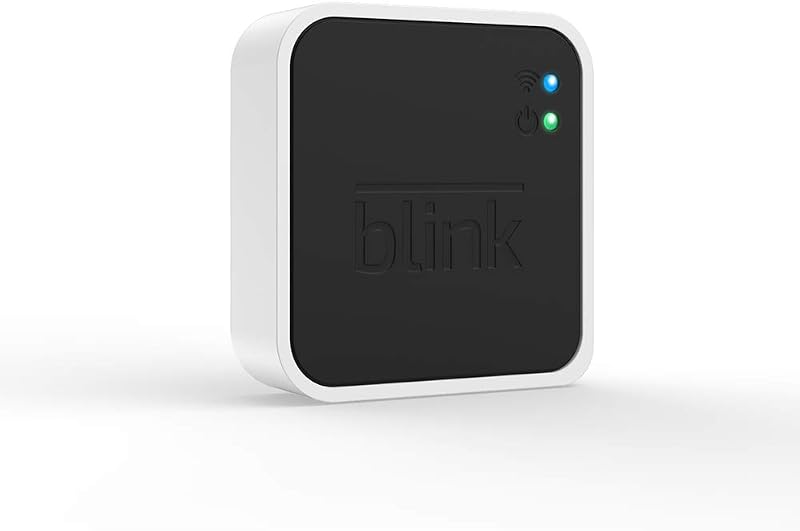
The Blink Add-On Sync Module 2 is designed for homeowners seeking turnkey home security integration rather than an open-ended STEM project. Unlike the bare-board Raspberry Pi module, this device acts as a closed-ecosystem wireless hub that coordinates compatible security cameras and handles local video storage. Choose this unit if you want quick, consumer-friendly surveillance coverage without writing custom code or handling raw electronic circuits.
HiLetgo 2pcs OV7670 Camera Module
Our score: 9.4/10

The HiLetgo 2pcs OV7670 640×480 0.3Mega package provides two basic VGA-resolution CMOS imaging boards equipped with an I2C interface. Designed for lightweight microcontrollers such as Arduino, ARM, and FPGA platforms, these entry-level boards deliver simple 300KP imaging. They suit beginners working on ultra-low-power electronics projects who only need basic optical sensing and cannot justify a full single-board computer setup.
HiSpyCam Mini Camera DIY Module
Our score: 8.0/10
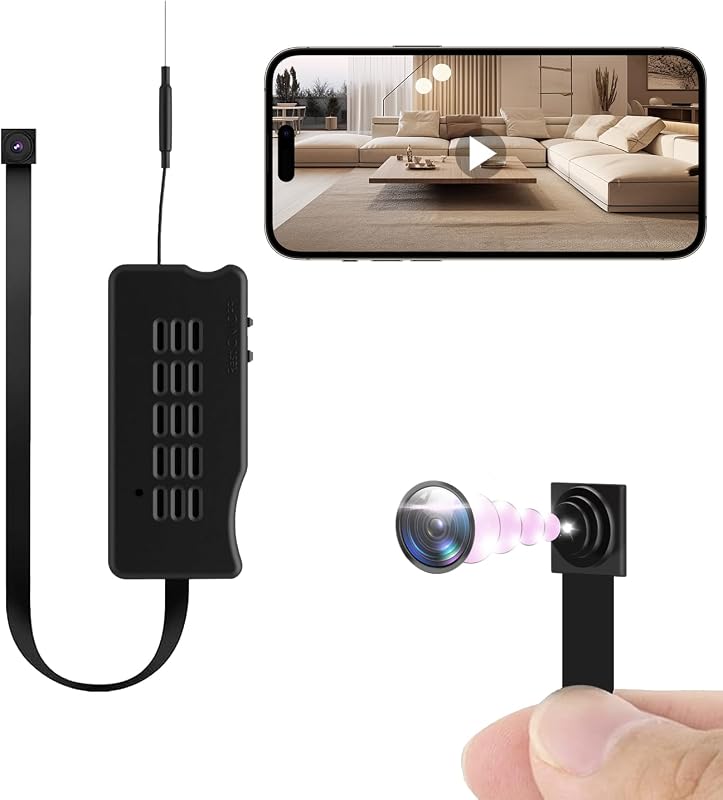
The HiSpyCam Mini Camera DIY Module offers a self-contained 1080p wireless camera assembly fitted with built-in Wi-Fi streaming. It features an ultra-compact lens and battery-ready cabling aimed at covert nanny cam monitoring and discreet indoor placement. Pick this alternative if you need a tiny, ready-made wireless streaming unit without configuring external single-board operating systems or manual focus rings.
Final Verdict
The Raspberry Pi HQ Camera represents a major leap forward for educational computing, combining the industrial-grade Sony IMX477R CMOS sensor with a robust aluminum lens mount. By embracing standard C and CS lens standards, providing adjustable back focus, and supporting multiple RAW output formats, it bridges the gap between affordable hobbyist computing and professional digital photography. While it requires separate lens sourcing and thoughtful handling of bare circuit boards, the structural quality and integrated tripod thread make it a dependable centerpiece for demanding builds.
For families, educators, and makers seeking a versatile platform for time-lapse studies, microscopy experiments, or hands-on computer science, this camera module delivers outstanding long-term educational value. It turns programming lessons into tactile optical experiments, encouraging students to master focal lengths and exposure mathematics through direct experimentation. If you are prepared to build your own system from the ground up, this imaging module stands as the benchmark for creative single-board photography.
FAQ
Does the Raspberry Pi HQ Camera come with a lens included?
No, the camera package includes the bare camera board, a 200mm ribbon cable, mounting hardware, and a C-to-CS mount adapter, but the optical lens must be purchased separately. This allows you to choose the exact focal length, zoom range, or macro capability needed for your specific project.
Which Raspberry Pi models are compatible with this camera?
According to the manufacturer specifications, this module is universally compatible with Raspberry Pi boards featuring a CSI camera port, including the Raspberry Pi Zero, Raspberry Pi 2 Model B, Raspberry Pi 3 Model B, Raspberry Pi 3 Model B+, and Raspberry Pi 4 Model B.
Can this camera module record high-definition video?
Yes, the module supports video capture resolutions up to 1080p, as well as full-sensor still and video captures up to 4056 x 3040 pixels. Software commands give you full control over frame rates, exposure modes, and capture timing.
Is the Raspberry Pi HQ Camera waterproof for outdoor garden monitoring?
No, the product listing explicitly indicates that this board is not water resistant. If you intend to use the camera outdoors for wildlife monitoring or garden time-lapses, you must install it inside a weather-resistant, sealed enclosure to protect the circuitry from moisture and dust.
What is the purpose of the adjustable back focus ring?
The adjustable back focus ring allows you to physically alter the distance between the rear lens glass and the image sensor. This mechanical adjustment is essential when switching between different C-mount and CS-mount lenses to ensure the optical assembly can achieve crisp focus across all ranges, including infinity.