As Amazon Associates, we earn from qualifying purchases. This means we may receive a small commission at no extra cost to you if you click through and make a purchase.
Automating household lighting often leads to familiar frustrations when family members sit still to read, study, or relax, only to have the room plunged into sudden darkness. The Besisglas Zigbee Presence Sensor is engineered to eliminate this nuisance by utilizing 24GHz millimeter wave radar rather than conventional infrared sensing. By actively monitoring micro-movements such as breathing and subtle posture shifts, this compact hardware piece ensures that automations remain active as long as an occupant occupies the space. Our analysis of the specifications and intended design indicates that this device serves as a capable, wire-free smartthings presence sensor that resolves common family automation headaches without complex wiring.
This hardware unit suits busy households that already run a compatible smart hub and desire hands-off lighting control in high-dwell zones like living rooms, home offices, and bathrooms. Because it operates completely on battery power, it provides simple placement without cluttering walls with power cables. Conversely, households without an existing Zigbee hub or shoppers seeking a direct-to-cloud Wi-Fi motion detector should look toward alternative hardware setups.
Besisglas Zigbee Presence Sensor at a Glance

| Attribute | Detail |
|---|---|
| Radar Frequency | 24 GHz millimeter wave radar |
| Detection Capability | Stationary human presence, micro-movement, active motion |
| Maximum Range | Up to 20 feet (6 meters); 7 meters maximum rating |
| Wireless Protocol | Zigbee (requires compatible hub) |
| Power Source | 2 AAA alkaline batteries (included) |
| Expected Battery Life | Up to 2 years under typical usage |
| Hub Compatibility | SmartThings, Home Assistant, Hubitat, Echo devices with built-in Zigbee, Tuya, Aeotec, Homey |
| Mounting Style | Wall mount |
| Operating Temperature | -10°C to 65°C (Upper rating 65°C / 25°F operating rating) |
| Color and Form Factor | White, single-unit package |
Millimeter Wave Radar Accuracy and Stationary Detection
Traditional motion detectors rely almost entirely on passive infrared (PIR) technology, which measures thermal shifts across optical zones. When a child sits quietly at a desk doing homework or a parent reads a book in a favorite armchair, PIR hardware assumes the room is vacant because body heat remains stationary. The Besisglas unit addresses this limitation by broadcasting high-frequency 24GHz radar signals. Millimeter wave technology bounces tiny radio waves off surfaces, detecting microscopic physical disturbances such as the rise and fall of a chest during normal breathing. This makes it an exceptionally competent stationary motion detector smart home setup for shared living spaces.
In real-world family scenarios, this level of sensitivity transforms how daily room routines operate. In a family lounge, children can watch movies or lounge across sofas without needing to periodically wave their arms toward the ceiling to keep floor lamps active. The manufacturer rates the detection distance at up to 20 feet (6 meters), with technical specifications listing a maximum reach of 7 meters. This broad radius easily spans standard residential bedrooms and open-concept family spaces, providing broad room-level coverage from a single fixed vantage point.
Maintaining responsive indoor environments often involves pairing motion systems with ambient monitoring tools. While a family might install an airthings view plus radon and indoor air quality monitor to manage ventilation and indoor air quality continuously, the Besisglas radar sensor handles physical room occupancy. Together, these smart fixtures help households maintain responsive spaces that react dynamically to family presence without requiring manual switch flipping or continuous user input.
Zigbee Ecosystem Compatibility and Hub Coordination
A central consideration when examining the Besisglas presence sensor specs is connectivity. Unlike Wi-Fi accessories that connect directly to your home router, this sensor communicates strictly across the Zigbee mesh standard. A dedicated Zigbee hub is mandatory for operation. Compatible systems include SmartThings, Hubitat, Home Assistant, Tuya, Aeotec, Homey, and select Amazon Echo devices that feature integrated Zigbee radios, such as the Echo 4th Generation, Echo Plus, Echo Studio, and Echo Show 10 or 8. Offloading occupancy tracking to a low-power Zigbee protocol helps preserve household Wi-Fi bandwidth for streaming and remote work.
For SmartThings users, configuring automations is straightforward once the sensor pairs with the hub. Through the smartthings mmwave presence sensor setup process, homeowners can build complex rules within the SmartThings mobile application. Routines can be configured so that entryway lights illuminate instantly upon physical entry and remain illuminated without timeout interruptions as long as occupancy is detected. Integrating with Alexa routines allows for hands-free adjustments where connected lamps, background music, or climate settings hold their state while someone remains in the room, dropping into low-power states only when the occupant genuinely departs.
Managing an expanding collection of smart gadgets across a multi-room house often involves combining protocol controllers. When orchestrating automated rooms, homeowners frequently employ centralized coordination bridges like the switchbot mini hub alongside their primary Zigbee network to unify infrared entertainment equipment and modern wireless sensors into a synchronized household routine.
Battery Efficiency and Hardware Durability
Historically, mmWave radar units have been notorious for high electrical consumption, forcing manufacturers to design them as plug-in devices tethered to five-volt USB wall adapters. Besisglas engineered this unit to operate on two standard AAA alkaline batteries, which arrive included in the package. The manufacturer rates the zigbee human presence sensor battery life at up to two years under typical usage scenarios. This extended longevity makes the device viable for long-term household deployment, freeing parents from constant battery replacements or messy visible charging cords dangling down walls.
Cordless operation is especially advantageous in family settings where cords represent safety hazards for toddlers and pets. Being able to secure the sensor flat against a wall without hunting for a vacant electrical outlet expands installation flexibility. The unit carries an operating temperature span from -10°C up to 65°C (with an upper temperature threshold of 65°C and listed 25°F rating), proving resilient against normal indoor shifts in climate, seasonal drafts, and radiant room warmth.
Tracking household conditions across fluctuating indoor climates works best when environmental equipment is reliable. Just as homeowners turn to dependable outdoor instruments like the weather station acurite pro to gauge temperature extremes outside the home, having durable indoor sensors capable of managing temperature swings ensures consistent automation performance across every season.
Practical Placement and Daily Family Living
Deploying a human presence sensor for bathroom automation is one of the most effective ways to solve daily household friction. Standard motion sensors regularly turn off lights on family members in the shower or during seated morning routines. Because the 24GHz radar penetrates shower curtains and senses stationary occupants, bathroom lights stay illuminated throughout the entire visit. It should be noted that the listing does not specify a waterproof or ingress protection rating, so the hardware should be positioned on a dry wall safely away from direct water splashes.
In children’s bedrooms and nurseries, the sensor serves a dual role in comfort and energy conservation. Parents can establish automations that dim nightlights when entering the room to settle a toddler and maintain low-level visibility while reading a bedtime story. Because the radar detects people sleeping motionless, automations will not abruptly shut off while a parent sits quietly beside a crib. Once the parent exits the coverage zone, the automation can initiate a gradual fade-out, keeping the nursery dark and restful.
When selecting a mounting location, consider the field of view. The wall-mount design works best when placed at chest height or slightly higher, angled across the room toward primary dwell points like desks, beds, or seating clusters. Avoid placing the sensor directly facing fluttering window curtains, oscillating fans, or loose mechanical objects, as mmWave radar is sensitive enough to pick up repetitive non-human movement if placed too close to moving fixtures.
Besisglas Zigbee Presence Sensor Pros and Cons
Pros
- 24GHz radar detects stationary human presence
- Up to 2-year battery life on included AAAs
- Broad Zigbee compatibility including SmartThings and Echo
- Wire-free wall mount eliminates messy cords
- Effective detection reach up to 20 feet
Cons
- Requires a compatible Zigbee hub to operate
- Listing does not specify water resistance rating
- Flat wall mount lacks magnetic swivel base
Who Should Buy the Besisglas Zigbee Presence Sensor
Buy It If
- You need an mmwave radar presence sensor smartthings setup that keeps lights on while you read, study, or sleep.
- You want a wire-free, wall-mounted installation powered by standard AAA batteries that avoids unsightly dangling cables.
- You already own a compatible Zigbee hub such as SmartThings, Hubitat, Home Assistant, or a Zigbee-enabled Echo speaker.
- You want automated bathroom and living room lighting that eliminates the need to wave hands to prevent dark room cutoffs.
Skip It If
- You do not have a dedicated Zigbee hub and rely entirely on direct 2.4GHz Wi-Fi accessories.
- You require a ceiling-mounted or magnetic-ball swivel base, as this unit utilizes a standard flat wall mount.
- You prefer mains-powered hardware to permanently avoid battery replacements over long periods of time.
Besisglas Zigbee Presence Sensor Alternatives Worth a Look
While the Besisglas unit provides wire-free Zigbee millimeter wave tracking, examining comparable alternatives helps clarify which communication protocol and feature profile best suits your home layout.
Akamatis Human Presence & Light
Our score: 9.6/10

The Akamatis Human Presence & Light sensor (Litos v3) provides mmWave smart motion detection paired with 2.4 GHz Wi-Fi connectivity and adjustable sensitivity. According to its listing, it requires Home Assistant to operate. Users who run dedicated Home Assistant servers and prefer utilizing standard household Wi-Fi instead of establishing a Zigbee mesh network should consider this device over the Besisglas model.
THIRDREALITY Zigbee Motion Sensor 2
Our score: 8.2/10
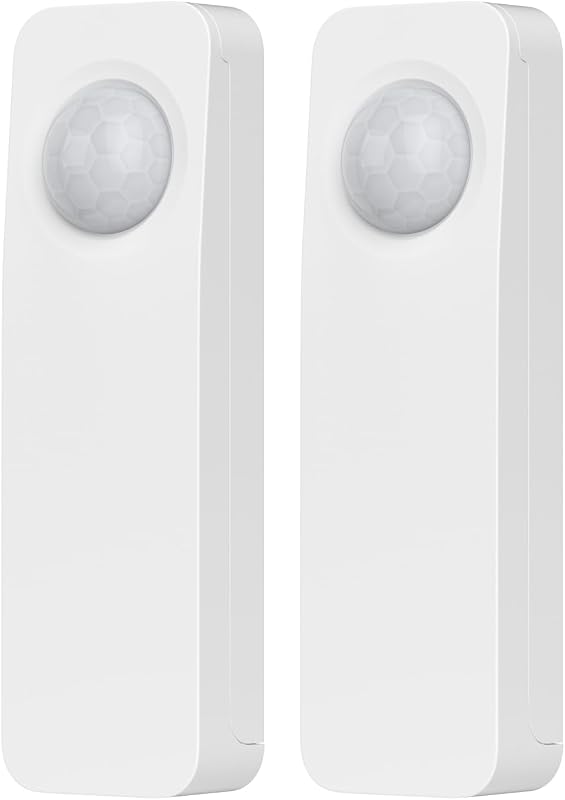
The THIRDREALITY Zigbee Motion Sensor 2 comes in a convenient two-pack configuration and features pet-friendly detection. It communicates via Zigbee and integrates with Home Assistant, SmartThings, Aeotec, Homey, Hubitat, and Echo devices with built-in Zigbee radios. Family homes with active indoor pets that frequently trigger false positives on ultra-sensitive radar systems will find this multi-pack motion sensor a more practical choice for wide entryway monitoring.
Final Verdict
When evaluating whether the hardware justifies integration into a family household, this besisglas zigbee presence sensor review reveals a clear functional advantage over standard motion detectors. By pairing 24GHz millimeter wave radar with wire-free battery convenience, Besisglas has eliminated the primary drawback of traditional occupancy sensors. Family members no longer have to suffer through sudden blackouts while reading in bed or taking a shower, and parents are spared the chore of routing extension cords across living room baseboards.
Ultimately, is besisglas presence sensor worth it for your automated home? If your household already utilizes a compatible Zigbee ecosystem and seeks a dependable smartthings presence sensor, this unit offers tremendous practical utility. It delivers the precise stationary tracking that busy homes require, backed by included AAA batteries rated for up to two years of continuous operation, earning it a spot as one of the best presence sensor for smartthings setups on the market.
FAQ
How does millimeter wave radar differ from a standard PIR motion sensor?
Traditional PIR sensors detect changes in infrared energy caused by moving warm bodies, meaning they frequently turn off lights when occupants remain stationary. In contrast, 24GHz millimeter wave radar actively bounces high-frequency radio waves across the room to detect tiny micro-movements, such as breathing or small head adjustments, keeping automations triggered even when a person is motionless.
What Zigbee hubs are compatible with the Besisglas presence sensor?
The sensor requires a Zigbee hub to operate. Based on the product specifications, it works with SmartThings, Home Assistant, Hubitat, Tuya, Aeotec, Homey, and Amazon Echo devices with built-in Zigbee radios, including the Echo 4th Generation, Echo Plus, Echo Studio, and Echo Show 10 or 8.
What is the expected battery life of the Besisglas presence sensor?
The device operates on two included AAA alkaline batteries and features an average rated battery life of up to two years under typical usage patterns. Because it runs on batteries, there is no need for continuous wall outlet power.
Can this sensor detect family members while they are sleeping or reading?
Yes. The 24GHz radar is sensitive enough to track subtle physical motion such as breathing. This allows smart lighting and comfort routines to remain active while someone reads quietly on a couch or rests in bed.
What is the maximum detection range of the device?
The listing states that the sensor can detect movement up to 20 feet (6 meters) away under standard conditions, with the official technical specifications listing a maximum range of 7 meters.


