As Amazon Associates, we earn from qualifying purchases. This means we may receive a small commission at no extra cost to you if you click through and make a purchase.
The Creality K2 Pro represents a substantial leap forward in desktop manufacturing, bringing industrial-grade enclosed hardware into creative and hobbyist workspaces. Engineered with an expansive 300x300x300mm build volume, active chamber heating capable of reaching 60°C, and native compatibility with the Creality CFS Smart Filament System, this machine handles ambitious multi-material and high-temperature engineering builds with remarkable consistency. For creators and household builders seeking a dependable, high-speed CoreXY workhorse that removes the traditional headaches of bed leveling, filament swapping, and heat retention, this machine stands as a remarkably capable, feature-complete package.
This automated machine is ideally suited for ambitious creators, serious hobbyists, and family workshop organizers who want to move beyond elementary single-spool desktop units to fabricate complex, multi-shade prototypes and structural parts. Those who have outgrown smaller entry-level beds like the creality ender 3 v3 se will appreciate the massive build chamber and hands-off calibration routines. However, shoppers with minimal desk space, casual users who only intend to produce small decorative trinkets on rare occasions, or those unable to manage a heavy 28-kilogram enclosure should explore lighter, more basic alternatives.
Creality K2 Pro at a Glance

| Feature | Specification |
|---|---|
| Build Volume | 300 x 300 x 300 mm |
| Maximum Print Speed | 600 mm/s |
| Maximum Acceleration | 20,000 mm/s² |
| Extruder Mechanism | Direct drive extruder with hardened steel gears |
| Nozzle Included | Hardened steel nozzle |
| Chamber Temperature Control | Active chamber heating up to 60°C |
| Filament System Support | Creality CFS with up to 16-color capacity |
| Monitoring Cameras | Dual AI cameras (Chamber and Nozzle) |
| External Dimensions | 17.5″D x 19″W x 33″H |
| Machine Net Weight | 28 kg |
Large-Scale Motion Mechanics and Speed Capabilities
At the mechanical core of the creality k2 pro 3d printer is an advanced motion architecture built to sustain rapid throughput without sacrificing surface quality. Utilizing Field Oriented Control (FOC) step-servo motors combined with precision linear rails, the motion platform supports speeds up to 600 mm/s and acceleration figures topping 20,000 mm/s². By running high-torque servo motors instead of standard open-loop stepper motors, the platform continuously tracks position, mitigating layer shifts and skipping steps during aggressive velocity transitions across tall geometries.
The spacious creality k2 pro build volume spans 300 x 300 x 300 mm, establishing a working area that accommodates large single-piece mechanical assemblies, functional helmets, or extensive batches of smaller items on a single build plate. Batch manufacturing significantly reduces workflow downtime because makers do not need to constantly clear the bed and initiate new jobs throughout the day. Reviewing the creality k2 pro specs reveals that the rigid metal frame maintains geometric stability under severe acceleration, eliminating the frame vibration that frequently plagues lighter, open-frame desktop printers.
Complementing this motion system is an intelligent auto-leveling process designed to conserve preparation time before every job. Rather than conducting an exhaustive, time-consuming mesh probe across all nine hundred square centimeters of bed space before every small run, the system uses localized probing. It inspects only the specific surface coordinates where the slicer places your model. This tailored probing sequence maintains precise first-layer adhesion while significantly cutting the wait time between pressing start and watching filament lay down on the platform.
Multicolor Integration and the CFS Automated Filament Unit
Multi-shade fabrication often introduces substantial complexity, but the creality k2 pro multicolor printing workflow is managed through the external Creality CFS Smart Filament System. The CFS unit acts as an intelligent feeder and dry box, handling automatic filament feeding, spool retraction, and spool identification using Hyper RFID tags. Because humidity destroys filament integrity over extended print times, the moisture-proof storage inside the CFS ensures that sensitive plastics remain shielded from ambient room humidity throughout lengthy multi-day print cycles.
Expanding the system with multiple CFS units allows users to print with up to 16 distinct colors or materials in a single build. Inside the creality k2 pro cfs enclosure, automated tensioning and routing ensure reliable transitions during rapid color changes. As explored in our deep-dive analysis of the creality k2 pro combo, this automation makes complex, multi-shade visual models accessible without requiring users to pause jobs and manually reload spools at specific layer heights.
Reliable material switching depends heavily on clean mechanical cutting at the print head, which is handled directly by an integrated cutter mechanism inside the extruder. When a color change occurs, the internal cutter severs the active filament cleanly above the melt zone, allowing the feeder to retract the strand and insert the subsequent line without jamming. This automated cycling allows makers to mix support materials, like dedicated breakaway or dissolvable filaments, seamlessly beneath complex overhangs on engineering components.
Active Chamber Heating and Advanced Material Processing
Maintaining thermal consistency within the build area is essential when working with technical filaments, and the creality k2 pro chamber heating addresses this requirement by sustaining internal temperatures up to 60°C. Standard passively enclosed printers rely solely on the residual heat radiating from the heated bed, which frequently leaves the upper chamber cold and causes temperature stratification. Active heating warms the air volume uniformly, preventing the severe shrinkage and edge curling common to materials like ASA and PPA.
By preventing rapid cooling between layers, the heated chamber creates superior inter-layer bonding across dense, functional mechanical parts. Engineering filaments like carbon-fiber composites and technical copolymers demand consistent thermal environments to achieve their rated tensile strength and impact resistance. Rather than producing parts that delaminate under stress, the heated environment ensures that large-scale structural parts remain true to dimension and free from internal thermal stress fractures.
This thermal capacity transforms the printer from an aesthetic prototyping tool into a functional fabrication station for home workshops and makerspaces. Users can print replacement household parts, automotive ducting, outdoor brackets, and custom tool enclosures that withstand environmental heat, sun exposure, and mechanical load. The enclosed architecture also contains thermal currents, keeping ambient room drafts from interrupting sensitive, hours-long prints.
Extruder Durability and Dual AI Camera Monitoring
A resilient drive mechanism is critical for handling aggressive composites, and the creality k2 pro direct drive extruder is equipped with hardened steel gears capable of gripping abrasive filaments like carbon fiber without suffering premature tooth wear. Delivering a volumetric flow rate up to 40 mm³/s, the extruder easily keeps pace with the 600 mm/s travel speeds. It includes a quick-swap hotend assembly, allowing users to rapidly change nozzles for different applications without disassembling the print head carriage.
Operational reliability is further augmented by a dual AI camera configuration that monitors the workspace in real time. The primary chamber AI camera operates around the clock to detect visual print failures, verify that the build plate is clean before a job begins, and generate smooth time-lapse recordings of the fabrication process. Having an overhead monitor running automated checks provides peace of mind when operating long jobs unattended in a separate room or workshop.
The secondary nozzle AI camera focuses directly on extrusion dynamics, actively inspecting the deposited line to adjust pressure advance and flow rate variables on the fly. This micro-level monitoring also oversees the waste chute, detecting blockages during filament purges before waste buildup can deflect the toolhead or cause a catastrophic collision. Compared to older platforms where hobbyists had to install upgrades like a creality ender 3 pro to achieve smoother motor control and quieter operation, the K2 Pro integrates active monitoring and intelligent self-regulation directly into the baseline hardware.
Software Ecosystem and Workshop Safety for Families
Operating a high-speed machine within a household requires software that is intuitive yet capable, which Creality achieves via Creality OS. The printer connects seamlessly over local LAN or WiFi, supporting remote slicing, job initiation, and monitoring through Creality Print, while retaining open compatibility with popular third-party slicers like Cura. Over-the-air (OTA) updates continuously deploy firmware improvements directly to the printer without requiring manual SD card flashing.
When considering the creality k2 pro for families, safety and operational stability are significant priorities. The machine is fully enclosed in a rigid metal chassis, shielding young family members from fast-moving belts and high-temperature hotends during operation. It also incorporates safety redundancies including filament runout sensors and power-loss recovery, ensuring that a temporary electrical flicker or an empty spool will pause the print safely rather than ruining hours of progress.
Deciding whether the creality k2 pro worth it for a home workshop often hinges on evaluating the physical space needed to support it. Measuring 17.5 inches deep, 19 inches wide, and 33 inches tall with a total weight of 28 kilograms, this is a substantial piece of workshop equipment. It demands a dedicated, stable workbench rather than a flimsy desk. For creators comparing full-scale production ecosystems to alternative configurations like the creality i7 combo, the enclosed thermal control and automated material storage of the K2 Pro provide an all-in-one manufacturing hub.
Creality K2 Pro Pros and Cons
Pros
- Large 300x300x300mm build volume for batch printing
- Active chamber heating reaching up to 60°C
- Automated CFS system supports up to 16 colors
- Fast 600 mm/s speed with servo motors
- Dual AI cameras for failure and flow monitoring
- Hardened steel gears and nozzle for abrasive filaments
Cons
- Substantial 28 kg weight requires sturdy bench
- Tall 33-inch height requires significant vertical clearance
- Includes only a single 500g starter spool
Who Should Buy the Creality K2 Pro
Buy It If
- You need a massive 300x300x300mm build area for large functional builds or multi-part batch production runs.
- You want automated multicolor and multi-material feeding with built-in moisture protection using the CFS system.
- You regularly print technical, warp-prone filaments like ASA and carbon-fiber blends that require active 60°C chamber heating.
- You value automated safety features like dual AI monitoring cameras, localized bed probing, and power-loss recovery.
Skip It If
- You operate in a cramped workspace that cannot accommodate a 33-inch tall, 28-kilogram heavy metal unit.
- You only plan to print basic single-color PLA models and have no use for heated chambers or multi-spool switching.
- You require an ultra-portable 3D printer that can be easily moved between classrooms or small desks.
Creality K2 Pro Alternatives Worth a Look
While the K2 Pro delivers extensive capability for large-format and technical printing, examining alternative enclosed and high-speed options can help clarify which printer best aligns with your available workspace and creative ambitions.
MakerWorld Model Library
Our score: 8.4/10

The MakerWorld Model Library package pairs an enclosed CoreXY high-speed platform with the Bambu Lab P1S Combo and AMS multi-color system, featuring automatic bed leveling and integrated model library connectivity. Users who prioritize an integrated ecosystem with seamless cloud-model repositories and a slightly more compact desktop footprint may favor this platform over the larger frame of the K2 Pro.
FLASHFORGE Adventurer 5M 3D Printer
Our score: 8.4/10

The FLASHFORGE Adventurer 5M 3D Printer is a CoreXY all-metal machine providing fully automatic leveling, 600mm/s maximum speeds, a 280°C direct extruder with a 3-second quick-detach nozzle, and a 220x220x220mm build volume. Creators who need fast turnaround times on standard single-color builds without dedicating an expansive amount of tabletop space will appreciate its smaller, manageable dimensions.
Beginner-Friendly Ecosystem with MakerWorld Model
Our score: 8.8/10
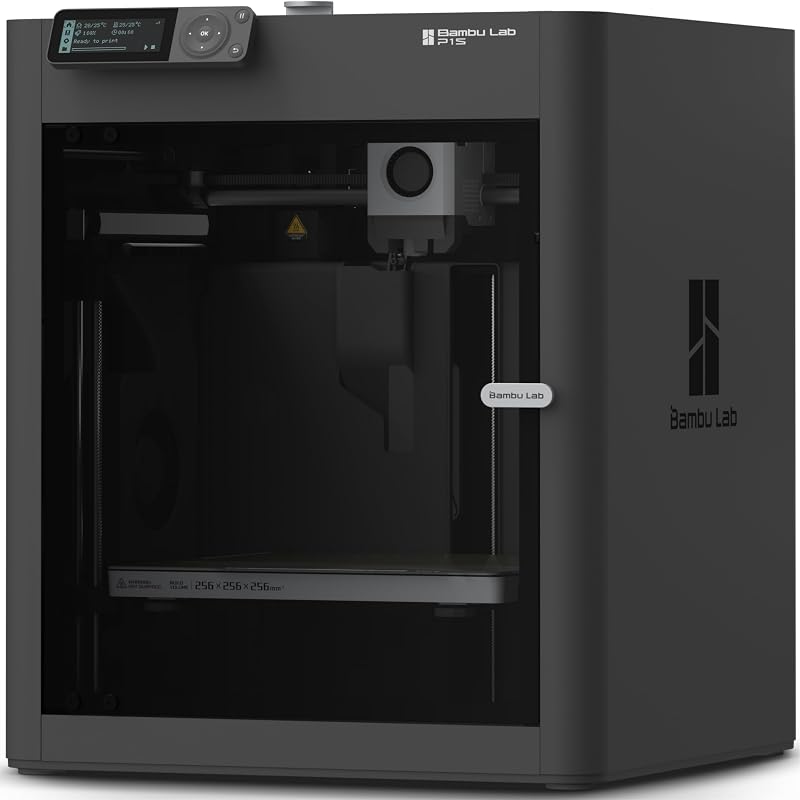
The Beginner-Friendly Ecosystem with MakerWorld Model listing highlights the standalone, enclosed CoreXY Bambu Lab P1S 3D printer, emphasizing straightforward setup and precision printing out of the box. Makers who want enclosed thermal stability for standard materials without the added footprint or expense of an automated external multi-filament feeder can pick this standalone unit.
Final Verdict
The Creality K2 Pro firmly establishes itself as a powerhouse 3D printer by uniting a 300x300x300mm build volume, active 60°C chamber heating, and intelligent multi-filament management. Its high-flow direct drive extruder, hardened steel components, and 600 mm/s motion platform powered by servo motors eliminate many of the speed and material barriers that traditionally restricted home workshops. The addition of dual AI cameras and localized bed probing elevates everyday usability, automating complex calibration routines that previously required extensive manual effort.
While its 28-kilogram weight and tall physical profile demand serious dedicated space, the performance trade-offs fall decisively in favor of the user. For ambitious hobbyists, engineering makers, and busy household workshops seeking professional-grade material handling and multi-color production in one integrated machine, the Creality K2 Pro is an outstanding, durable investment built to handle the demands of modern fabrication.
FAQ
How does active chamber heating benefit advanced filament printing?
Active chamber heating warms the internal air up to 60°C, maintaining uniform temperature across the entire part. This prevents uneven cooling, which is the primary cause of corner warping, poor layer adhesion, and internal stress cracks when printing with demanding materials like ASA and PPA.
What makes the Creality CFS different from basic spool holders?
The CFS is an intelligent filament system that provides sealed, moisture-proof storage, automated filament identification through RFID tags, and automated feeding and retracting. It enables seamless multi-color printing up to 16 colors when linked with multiple units and supports automated material switching for dedicated support interfaces.
Does the auto-leveling routine probe the entire build plate every time?
No, the intelligent leveling system conducts localized probing exclusively in the specific area of the bed where your sliced model will be printed. This targeted probing ensures accurate first-layer height while significantly decreasing the calibration time needed before each print starts.
What role do the dual AI cameras play during operation?
The dual camera system splits responsibilities between chamber-wide and nozzle-level tracking. The chamber camera handles 24-hour visual monitoring, print failure alerts, build plate clearance checks, and time-lapse creation, while the nozzle camera monitors extrusion lines in real time to optimize flow rates, tune pressure advance, and detect waste chute blockages.
Can the direct drive extruder handle abrasive filaments out of the box?
Yes, the direct drive extruder is manufactured with hardened steel drive gears and includes a hardened steel nozzle in the package. This heavy-duty hardware handles abrasive composite materials, such as carbon-fiber filled filaments, without suffering the rapid wear seen on standard brass components.


