As Amazon Associates, we earn from qualifying purchases. This means we may receive a small commission at no extra cost to you if you click through and make a purchase.
The Anycubic Photon Mono M7 Pro represents a significant technical leap for desktop stereolithography, pairing an ultra-high-definition 14K monochrome optical engine with an automated material management subsystem designed to strip away the mess and uncertainty that historically plagued liquid resin printing. Desktop photopolymer hardware has traditionally demanded meticulous manual oversight, from ambient temperature regulation to messy resin decanting, but this machine integrates dynamic vat heating, automated refilling, and a comprehensive suite of hardware diagnostics to streamline production. Our verdict is that the Photon Mono M7 Pro stands as an exceptional high-speed, high-fidelity production tool for makers who demand showroom-grade miniature detail without the typical operational friction.
This automated machine is ideally tailored for tabletop gamers, miniature sculptors, digital artists, and educational workshops requiring microscopic dimensional accuracy and reliable batch output without constant babysitting. However, households with curious young children or spaces lacking dedicated ventilation should exercise caution, as photopolymer resins demand rigorous chemical handling and protective equipment. Families seeking a purely plug-and-play toy-making appliance for unventilated living spaces may prefer exploring enclosed filament machines like the anycubic kobra s1 combo instead.
Anycubic Photon Mono M7 Pro at a Glance

| Attribute | Specification Detail |
|---|---|
| Brand and Manufacturer | ANYCUBIC |
| Model Number | BR-M7PR265 |
| Screen Resolution | 14K Monochrome LCD (13312 x 5120) |
| Pixel Precision | 16.8 x 24.8 μm XY Resolution |
| Minimum Feature Size | 0.3 mm diameter holes |
| Maximum Print Speed | Up to 170 mm/h (high-speed resin) / 130 mm/h (standard resin) |
| Optical Light Engine | COB LighTurbo 3.0 with Fresnel lenses and front-facing reflectors |
| Light Uniformity & Angle | Over 90% uniformity, light divergence within 3° |
| Material Automation | Auto-fill feeding and one-key remaining resin recycling |
| Temperature Regulation | Dynamic temperature-controlled vat |
| Intelligent Diagnostic Sensors | 6-point detection (build plate, residue, level, failure, film life, connections) |
| Dimensions and Weight | 25″D x 15″W x 35″H; 15.13 kg |
| Construction Materials | ABS, Aluminum, Polycarbonate (Black) |
Print Quality and Optical Precision
The visual fidelity of the Anycubic Photon Mono M7 Pro centers around its cutting-edge 14K monochrome LCD panel. Boasting a staggering resolution of 13312 by 5120 pixels, this screen achieves an XY resolution of 16.8 by 24.8 microns. In practical hobbyist terms, this microscopic pixel pitch virtually eliminates the visible layer stair-stepping and pixel grid artifacts commonly found on older monochrome panels. The optical system can cleanly resolve negative features such as relief holes down to just 0.3 millimeters in diameter, enabling miniature painters and scale modelers to preserve fingernail textures, facial expressions, delicate filigree, and precision interlocking pin joints without post-cure carving or filling.
Raw pixel count is meaningless without a controlled, uniform light delivery system, and Anycubic addresses this with their proprietary LighTurbo 3.0 optical architecture. This system combines a chip-on-board (COB) light array with precision Fresnel lenses and front-facing reflectors to constrain light divergence within a narrow 3-degree angle. By keeping light rays nearly perpendicular to the LCD mask, the printer prevents light bleed across adjacent pixels. Furthermore, optical uniformity exceeds 90 percent across the entire build zone, eliminating the common edge falloff where prints near the periphery of the vat fail or cure softer than those in the center. An integrated light-off compensation algorithm dynamically calculates cooling periods and exposure stability, ensuring consistent layer adhesion across long print cycles.
When evaluated against larger production hardware like the anycubic mono m7 max, the Photon Mono M7 Pro prioritizes absolute dimensional crispness and edge sharpness. The combination of high-density masking and collimated light ensures that fine structural overhangs, organic hair strands, and razor-thin mechanical tolerances come out crisp rather than rounded off by optical bloom. For designers who produce master patterns for silicon molding or display-ready resin figurines, the optical baseline established by these anycubic photon mono specs provides gallery-level finish straight off the build plate.
Print Speed and Real-World Throughput
Velocity has long been a bottleneck in photopolymer printing, where peel forces and viscous suction delays frequently stretch build times into entire days. The Anycubic Photon Mono M7 Pro redefines operational throughput by achieving vertical build speeds of up to 170 millimeters per hour when printing at a 0.1-millimeter layer thickness using specialized high-speed resins. Even when loaded with standard viscosity modeling resins, the printer sustains rates up to 130 millimeters per hour. This rapid layer cycling transforms resin printing from an overnight waiting game into an active, iterative daytime design process where multiple design revisions can be tested in a single afternoon.
Achieving these rapid speeds without ripping delicate supports requires balanced mechanical coordination between the light engine and the Z-axis drive. The high-powered LighTurbo 3.0 setup allows curing times per layer to drop significantly, while the advanced release film management and chassis rigidity absorb rapid peel cycles without introducing layer shift. For domestic users running tabletop terrain campaigns or prototyping household utility brackets, this throughput minimizes downtime and prevents the backlog of printing queues that often frustrates shared hobby spaces.
High speed also delivers practical benefits for multi-part scale projects. A full build plate of miniature components that previously required ten to twelve hours on older generation mono hardware can be completed in a fraction of that timeframe. This swift turnaround dramatically increases the overall utility of the machine, ensuring that hobbyists get their models onto the painting desk or assembly bench quickly without sacrificing the structural integrity of thin limbs and delicate tools.
Automated Resin Management and Vat Heating
Perhaps the most transformative upgrades introduced on the Anycubic Photon Mono M7 Pro are its dynamic vat temperature regulation and automated fluid delivery subsystems. Photopolymer resin is notoriously sensitive to ambient temperature; cold environments dramatically increase fluid viscosity, resulting in incomplete vat filling between lifts, poor layer bonding, and catastrophic print delamination. The M7 Pro resolves this persistent issue by incorporating a dynamic temperature-controlled vat that actively warms the resin to its optimal operational thermal window. This feature eliminates the need for messy auxiliary ceramic heaters or thermal enclosures when operating the machine in unheated garages, basements, or breezy craft rooms.
Complementing the thermal management is the intelligent anycubic photon mono auto resin fill module, which completely removes the guesswork from material handling. During prolonged, resin-hungry print jobs, running dry mid-print results in total part failure and wasted material. The M7 Pro automatically meters resin from an external reservoir into the vat when sensor thresholds detect low levels. Once the print finishes, the unit features a one-key resin recycling mode that pumps unused resin back into the storage container, virtually eliminating the spills, sticky funnels, and vat-scraping accidents that traditionally make resin cleanups stressful for family households.
For any user seeking an anycubic photon mono resin printer that integrates cleanly into a clean hobby environment, these fluid handling enhancements deliver unparalleled convenience. By containing the liquid photopolymer inside automated flow lines and actively managing temperature inside the vat, the printer drastically reduces direct chemical exposure, accidental drips onto domestic workbenches, and VOC dispersion caused by open vat pouring. This automated workflow elevates the overall anycubic photon mono ease of use beyond standard manual alternatives.
Sensor Array and Intelligent Detection Systems
Mechanical reliability on the Anycubic Photon Mono M7 Pro is managed by an expansive suite of six intelligent detection sensors designed to identify hardware issues before they result in damaged components or LCD punctures. A key failure point in resin printing occurs when cured debris remains floating in the vat after a failed print; the build plate descends onto the hard cured fragment and crushes the costly LCD screen underneath. The M7 Pro incorporates an optical and tactile residue detection system alongside failed print detection to halt operation the moment foreign particles or detached models are identified.
The six-point intelligent diagnostic architecture covers:
- Build plate installation detection to prevent motorized crashes if the user forgets to secure the platform prior to starting.
- Residue detection within the resin vat to protect the 14K monochrome LCD against compression damage.
- Real-time resin level monitoring that interfaces with the automated feeder to prevent fluid starvation during tall prints.
- Failed print detection that alerts the user early when layers stop adhering properly to the build surface.
- Release film lifespan management that tracks cumulative cycles and notifies users when the bottom film requires replacement.
- Component connection status verification that validates motor, sensor, and optical cabling health at startup.
This automated diagnostic umbrella makes the anycubic photon mono setup remarkably forgiving for newcomers. Rather than requiring operators to manually verify clearance tolerances, release film tension, and fluid levels through trial and error, the firmware performs automated pre-flight diagnostics. In our comprehensive assessment for this anycubic m7 pro analysis, having automated startup verification turns what was once an intimidating chore into a predictable, highly repeatable computing task.
Build Quality, Household Safety, and Value
Constructed with a heavy-duty chassis combining rigid aluminum extrusions, durable ABS paneling, and high-impact polycarbonate elements, the Anycubic Photon Mono M7 Pro is engineered for long-term operational stability. Weighing in at a substantial 15.13 kilograms (over 33 pounds) with external dimensions measuring 25 inches deep, 15 inches wide, and 35 inches high, this machine possesses considerable physical presence. The sheer mass and metal framework are critical for dampening high-speed vibration along the vertical Z-axis, ensuring that high-acceleration lift cycles do not introduce micro-banding or surface ripples on tall vertical models.
When considering household integration, safety must remain paramount. While the automated resin filling and vat recovery features drastically reduce the odds of accidental skin contact or table spills, liquid resins still release volatile organic compounds and carry inherent chemical sensitivities. The unit requires a stable, level workbench in a well-ventilated area, away from high-traffic family zones and direct sunlight. Responsible adult supervision is non-negotiable whenever handling unwashed prints, operating the post-print isopropyl wash baths, or performing UV curing cycles.
When evaluating whether the Anycubic Photon Mono M7 Pro represents worthwhile long-term value, its industrial-grade components and automated safeguards justify the investment over basic entry-level printers. By preventing ruined screens through residue detection, eliminating wasted resin bottles through temperature-managed curing, and saving dozens of hours of cleanup through automated pumping, the machine delivers exceptional operational return. For makers who take their tabletop gaming, functional modeling, or artistic sculpting seriously, it represents a mature, highly capable workshop addition.
Anycubic Photon Mono M7 Pro Pros and Cons
Pros
- Ultra-crisp 14K resolution with 16.8×24.8 micron precision
- Fast print speeds reaching up to 170 mm/h
- Dynamic heated vat maintains optimal resin temperature
- Automated resin fill and one-key recycling system
- Six-point intelligent sensor detection protects LCD screen
Cons
- Substantial 15.13 kg weight requires sturdy benchtop
- Demands dedicated ventilation for liquid chemical handling
Who Should Buy the Anycubic Photon Mono M7 Pro
Buy It If
- You require extreme 14K surface resolution and sub-millimeter detailing for miniature tabletop gaming, character design, or jewelry molding.
- You print in cooler spaces like garages or basements and need an integrated dynamic vat heater to maintain consistent chemical curing.
- You want automated resin filling and one-key fluid recycling to eliminate manual funneling and reduce direct chemical contact.
- You value automated diagnostic sensors that actively protect your LCD screen from residue damage, mechanical misalignments, and print detachment.
Skip It If
- You only print large, simple mechanical brackets where a standard FDM filament printer is cleaner and requires no chemical washing stations.
- Your dedicated workspace lacks adequate ventilation or cannot accommodate a tall, heavy 15-kilogram desktop machine.
- You need a lightweight, ultra-compact printer that can be easily tucked away inside an ordinary small living room cabinet.
Anycubic Photon Mono M7 Pro Alternatives Worth a Look
While the Anycubic Photon Mono M7 Pro delivers elite resin precision, different hobbyist workflows, material preferences, and household safety considerations may lead some users toward alternative digital fabrication platforms.
MakerWorld Model Library
Our score: 8.4/10

The MakerWorld Model Library bundle pairs a Bambu Lab P1S Combo with an AMS unit, delivering high-speed CoreXY enclosed multi-color filament printing alongside auto bed leveling. This setup is ideal for households seeking colorful, multi-material toys and structural plastic components without the chemical handling and post-wash baths required by liquid resin.
FLASHFORGE Adventurer 5M 3D Printer
Our score: 8.4/10

The FLASHFORGE Adventurer 5M 3D Printer is an enclosed CoreXY all-metal FDM machine featuring fully automatic bed leveling, a 600 mm/s high-speed printing capability, a 280-degree Celsius direct extruder with a 3-second detachable nozzle, and a 220 by 220 by 220 mm build volume. Buyers prioritizing rapid thermoplastic construction, mechanical prototyping, and swift nozzle swaps over microscopic resin fidelity will find this an accessible domestic alternative.
Beginner-Friendly Ecosystem with MakerWorld Model
Our score: 8.8/10
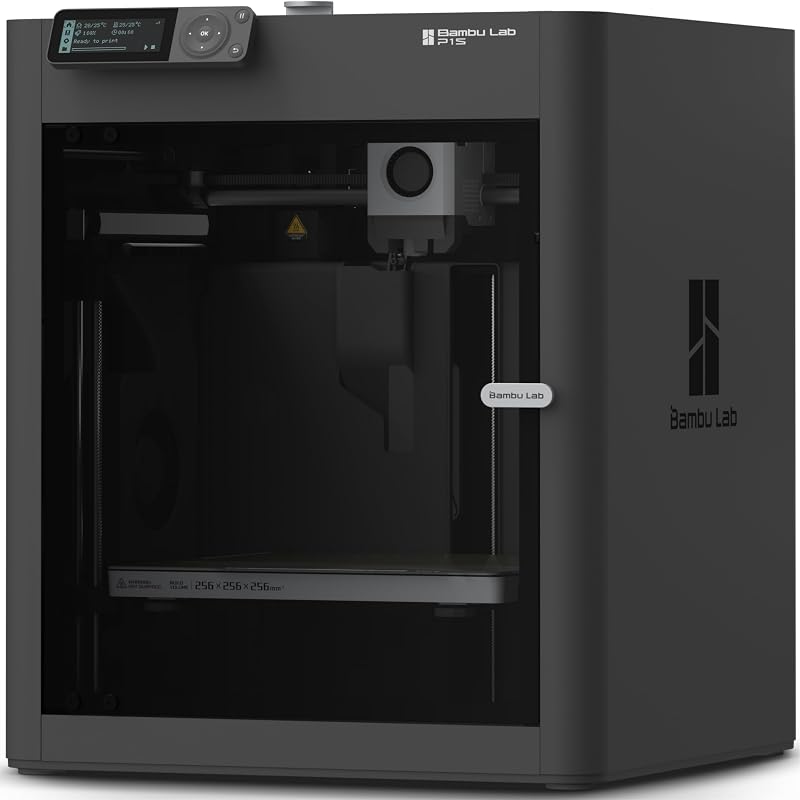
The Beginner-Friendly Ecosystem with MakerWorld Model offering highlights the standalone enclosed CoreXY Bambu Lab P1S 3D printer, engineered for high-speed, high-precision ready-to-use filament printing. It is an excellent match for beginner hobbyists who want a dependable, enclosed thermoplastic workflow supported by an established digital model ecosystem.
Final Verdict
The Anycubic Photon Mono M7 Pro stands out as an exceptionally refined stereolithography system that tackles the most frustrating pain points of modern desktop resin printing. By pairing a phenomenal 14K monochrome screen with an ultra-collimated LighTurbo 3.0 optical system, Anycubic ensures that model details, crisp edges, and micro-scale features emerge with gallery-level precision. At the same time, the inclusion of 170 mm/h vertical print speeds ensures that hobbyists spend less time waiting for jobs to clear and more time painting, assembling, and testing their physical creations.
Beyond its sheer visual and kinetic performance, the machine’s true victory lies in its automated usability enhancements. The dynamic temperature-controlled vat, one-key resin recycling system, and comprehensive six-point sensor diagnostic array transform resin printing from an unpredictable, messy chore into a controlled, dependable fabrication process. For dedicated miniature painters, professional makers, and home craftspeople equipped with a well-ventilated workshop, the Anycubic Photon Mono M7 Pro delivers an outstanding combination of fine detail, operational safety, and long-term printing satisfaction.
FAQ
What is the maximum print speed of the Anycubic Photon Mono M7 Pro?
The Anycubic Photon Mono M7 Pro achieves vertical print speeds up to 170 millimeters per hour when using high-speed resin at a 0.1-millimeter layer thickness. When operating with standard modeling resins, the printer maintains an impressive speed of up to 130 millimeters per hour.
How does the automated resin management system work?
The system utilizes continuous resin level detection sensors combined with an automated fluid pump to add resin into the vat whenever levels run low during tall print jobs. After printing completes, a one-key recycling function activates the pump in reverse to transfer unused liquid resin out of the vat and back into the storage bottle, eliminating the need for messy funnels.
What resolution does the 14K monochrome LCD screen offer?
The 14K monochrome screen features a native resolution of 13312 by 5120 pixels, providing an XY precision of 16.8 by 24.8 microns. This ultra-fine pixel density allows the printer to render crisp, micro-scale features and negative holes as small as 0.3 millimeters in diameter.
Does the Anycubic Photon Mono M7 Pro have built-in safety sensors to prevent damage?
Yes, the printer incorporates six distinct diagnostic sensors. These monitor component connections, resin vat residue, resin fluid levels, failed print detachment, release film lifespan, and build plate installation to prevent LCD damage and mechanical motor collisions.
Why is the dynamic temperature-controlled vat important?
Liquid photopolymer resins become thick and cure inconsistently when cold, leading to layer separation and print failures. The dynamic heated vat automatically adjusts and maintains the resin material at an optimal curing temperature, allowing reliable printing in cooler basements, garages, and domestic workshops.


