As Amazon Associates, we earn from qualifying purchases. This means we may receive a small commission at no extra cost to you if you click through and make a purchase.
The Anycubic Kobra 3 Max is an oversized desktop FDM 3D printer engineered to produce massive, single-piece models without requiring the tedious splitting and gluing steps typical of standard-sized hobby machines. Combining a vast print area with high-speed motion hardware, the system delivers an efficient solution for ambitious household fabrications, prop making, and functional domestic builds.
This large-scale system suits busy family makers, hobbyists, and functional designers who need to produce large items like storage crates, full-scale DIY sand tables, and pet playgrounds in one seamless process. Those working with limited desk space in small apartments, or shoppers wanting multicolor printing functional right out of the box without separate add-ons, should consider more compact or bundled alternatives instead.
Anycubic Kobra 3 Max at a Glance

| Attribute | Specification Details |
|---|---|
| Build Volume | 420 x 420 x 500 mm (16.5 x 16.5 x 19.7 inches) |
| Maximum Print Speed | Up to 600 mm/s |
| Maximum Acceleration | 10000 mm/s² |
| Firmware Platform | Kobra OS |
| Motion System Components | SG15 high-precision bearings with dual-axis core design |
| Intelligent Monitoring | AI real-time recognition with automatic pause and spaghetti alerts |
| Multicolor Support | Requires external Anycubic ACE Pro (up to 8 colors across 2 units) |
| Supported Filaments | PLA, PLA+, TPU, ABS, ASA, PETG, Matte PLA, Silk PLA |
| Machine Weight | 47 pounds |
| Chassis Dimensions | 29.5″D x 32.25″W x 7.25″H |
Massive Build Volume for Large Household Projects
The defining trait of this machine is its jumbo-sized workspace measuring 420x420x500mm, or roughly 16.5×16.5×19.7 inches. For home builders, this expansive anycubic kobra max build volume eliminates the traditional bottleneck of dividing large digital meshes into miniature slices. Instead of bonding separate panels together with adhesives and spending hours sanding down visible joints, users can fabricate oversized items like custom pet playgrounds, storage bins, and full-scale DIY sand tables directly in one continuous production run.
Accommodating such immense print volume naturally influences the machine’s physical footprint within a family workshop or craft room. Tipping the scales at 47 pounds with product dimensions listed at 29.5 inches deep by 32.25 inches wide and 7.25 inches high, this gray chassis demands a dedicated, stable workbench rather than a cramped computer desk. Unlike compact desktop resin options such as the anycubic mono m7 max, this FDM unit needs ample vertical and horizontal clearance so its moving axes can travel unobstructed through long fabrication sessions.
For home hobbyists tackling large decorative pieces, cosplay armor, or practical garage fixtures, having 500mm of vertical height allows items to be oriented upright, optimizing strength along mechanical layer lines. This scale ensures that growing families can execute large-scale educational models or durable domestic containers without needing an industrial workshop setup.
Print Speed and Motion Architecture
Historically, large-format 3D printers struggled with extended print durations, often taking multiple days to finish a single large model. The Anycubic Kobra 3 Max counters this limitation with an aggressive anycubic kobra max print speed rated up to 600mm/s, supported by an acceleration capability reaching 10000mm/s². This rapid movement significantly shortens the turnaround time on bulky household prints, letting families complete weekend builds without keeping the machine running continuously for a full week.
Driving this velocity is the manufacturer’s dedicated Kobra OS firmware platform, which manages acceleration curves and motor timing to preserve fine detail even as velocity climbs. The hardware underpinning these movements includes SG15 high-precision bearings coupled with a dual-axis core design. This mechanical configuration minimizes friction, absorbs lateral vibrations, and enhances overall stability so that prints maintain clean, uniform outer perimeters rather than suffering from heavy ringing or banding artifacts.
The combination of high-speed acceleration and robust motion components provides the throughput necessary to make massive prints practical for family schedules. Whether crafting durable replacements for broken patio tools or printing decorative holiday centerpieces, the accelerated workflow keeps maker projects moving quickly from digital concept to physical reality.
Smart AI Detection and Automated Safety Features
A failed print on a standard desktop unit wastes a minor amount of plastic, but an undetected failure on a jumbo-format machine can ruin an entire spool of material. To prevent these costly mishaps, this unit features anycubic kobra max ai detection, which deploys intelligent visual monitoring across the build area in real time. The camera system actively monitors the extrusion path to catch structural errors before they ruin a multi-hour project.
If the AI system detects anomalous filament formations—commonly referred to as spaghetti errors—or notices defects during bulk batch printing, it automatically pauses the print cycle and issues an immediate alert to the user. This automated intervention ensures that busy parents and makers do not return to their workspace to find a bird’s nest of wasted plastic encasing the print head, directly supporting long-term anycubic kobra max reliability.
For household users running long fabrication tasks overnight, this real-time safety net provides genuine peace of mind. By halting production as soon as a print detaches or fails to extrude correctly, the smart monitoring system protects the toolhead hardware from damage and conserves expensive filament stocks for future family activities.
Multicolor Expandability and Material Versatility
Creative households frequently seek colorful, eye-catching results for children’s toys, multi-tone organizational bins, and school visual aids. While this base package is sold as the printer unit only, it supports anycubic kobra 3 max multicolor functionality through an external accessory connection. Users interested in multi-hue prints can connect the Anycubic ACE Pro unit to unlock four-color automatic printing, or link two separate ACE Pro units together to achieve vibrant eight-color output.
Filament compatibility is extensive, giving families the flexibility to match specific materials to their intended household application. The printer handles standard hobby filaments like PLA, PLA+, Matte PLA, and Silk PLA for visual display models, while also accommodating flexible TPU for soft gaskets or toys. For functional outdoor or mechanical parts requiring heat and UV resilience, the system supports ABS, ASA, and PETG filaments. Those investigating factory-integrated multi-filament setups might also compare these capabilities against systems like the anycubic kobra s1 combo to decide whether an integrated or modular multi-color route best matches their budget.
Because the multi-material unit is an optional add-on, buyers can start with single-color utility right away and add multi-spool feeding systems later as their hobby demands expand. This phased approach allows families to master basic FDM printing principles before tackling multi-material purge blocks and filament retraction settings.
Hardware Reliability, Usability, and Support
Evaluating anycubic kobra max for beginners requires looking at the machine’s setup, maintenance demands, and overall ease of operation. Weighing 47 pounds, this printer represents a substantial piece of equipment that benefits from two people during initial unboxing and placement. However, the pre-configured Kobra OS simplifies bed calibration and routine command inputs, keeping menu navigation approachable for first-time operators.
The physical anycubic kobra max specs reflect a machine built for enduring use, but consumer support remains an essential factor for long-term ownership. The manufacturer packages each printer after standardized pre-shipment testing and backs the hardware with a one-year warranty, though specific consumable and high-wear parts carry shorter warranty periods of three to six months. Registered users also gain access to 24/7 customer service to assist with operational queries or troubleshooting.
From a maintenance perspective, the dry FDM fabrication process avoids the messy chemical wash cycles associated with resin printers, which often require dedicated cleaning stations like the anycubic wash and cure 3. As an FDM system, upkeep primarily involves keeping the dual-axis core lubricated, ensuring the SG15 bearings remain debris-free, and monitoring nozzle condition across heavy print volumes.
Anycubic Kobra 3 Max Pros and Cons
Pros
- Jumbo 420x420x500mm build area for seamless prints
- High print speeds reaching up to 600mm/s
- Real-time AI monitoring pauses on spaghetti errors
- Stable motion via SG15 bearings and dual-axis core
- Modular multicolor expansion up to 8 colors
- Broad filament support including PLA, PETG, TPU, and ASA
Cons
- Requires separate ACE Pro purchase for multicolor
- Heavy 47-pound build requires substantial workbench space
- Limited 3 to 6 month warranty on certain parts
Who Should Buy the Anycubic Kobra 3 Max
Buy It If
- You need to fabricate large single-piece models such as pet playgrounds, sand tables, or cosplay accessories without assembling seams.
- You prioritize rapid print turnarounds and want high-speed motion up to 600mm/s backed by 10000mm/s² acceleration.
- You want visual AI detection to automatically pause printing if filament spaghetti occurs during unattended runs.
- You desire an upgrade path toward 4-color or 8-color printing by adding ACE Pro units over time.
Skip It If
- You have tight tabletop constraints and lack a sturdy, dedicated table to support a 47-pound, wide-chassis machine.
- You expect multicolor printing accessories to come bundled directly in the base printer box without purchasing separate hardware.
- You strictly print miniature tabletop miniatures or small craft items that do not require an oversized 420x420x500mm build area.
Anycubic Kobra 3 Max Alternatives Worth a Look
Shoppers exploring the high-speed and multi-color 3D printing landscape have several compelling alternative models to consider, depending on their space constraints, structural preferences, and project goals.
MakerWorld Model Library
Our score: 8.4/10

The MakerWorld Model Library package highlights the Bambu Lab P1S Combo, an enclosed CoreXY 3D printer paired with an AMS multi-color module and auto bed leveling. While it offers a smaller print volume than the Kobra 3 Max, makers who prioritize an enclosed chamber for sensitive technical filaments and an included multi-color ecosystem straight from the carton may prefer this complete setup.
FLASHFORGE Adventurer 5M 3D Printer
Our score: 8.4/10

The FLASHFORGE Adventurer 5M 3D Printer is a compact CoreXY machine featuring fully automatic leveling, a 280°C direct extruder with a 3-second detachable nozzle, and speeds up to 600mm/s within a 220x220x220mm build size. This machine represents an excellent alternative for craft rooms with limited tabletop room where high-speed printing takes priority over massive build dimensions.
Beginner-Friendly Ecosystem with MakerWorld Model
Our score: 8.8/10
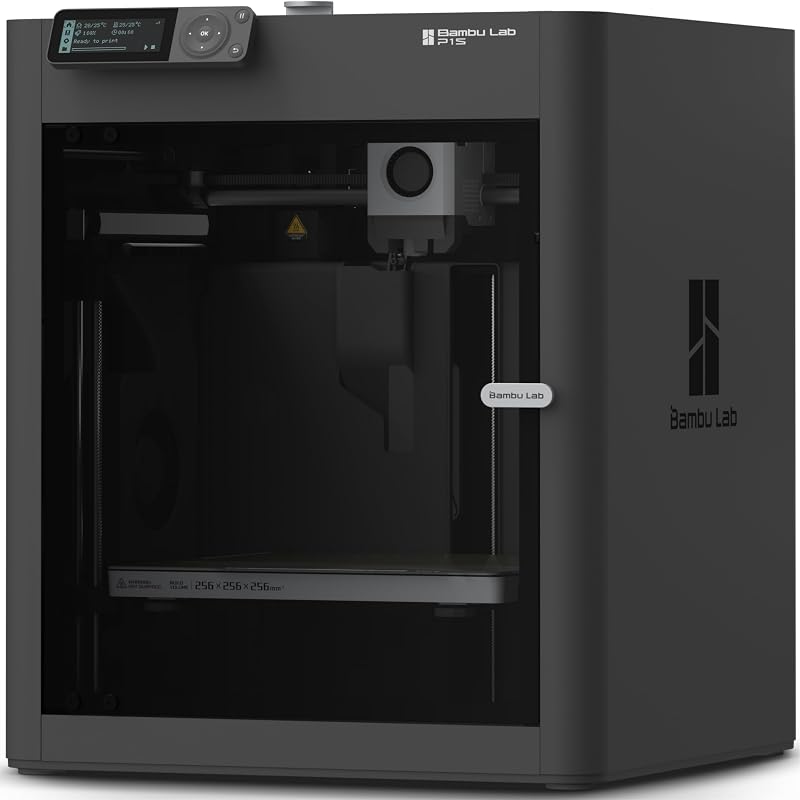
The Beginner-Friendly Ecosystem with MakerWorld Model presents the standalone Bambu Lab P1S FDM printer featuring an enclosed CoreXY design and high-speed precision printing. Families seeking a ready-to-use, enclosed structural frame with integrated platform access—without the massive workspace footprint of a 500mm-tall bed slinger—will find this machine well suited for routine domestic builds.
Final Verdict
Determining whether the anycubic kobra max family use profile fits your household comes down to your project ambitions and available workshop space. By combining an exceptional 420x420x500mm build volume with swift 600mm/s print speeds and smart AI visual monitoring, this printer removes the artificial size limits that hold back home fabrication. It bridges the gap between commercial-scale volume and accessible domestic utility, making life-sized projects feasible for creative households.
While the footprint is undeniably bulky and multicolor capabilities require investing in external ACE Pro units, the foundational machine offers outstanding mechanical stability via its SG15 bearings and dual-axis core design. For makers ready to tackle oversized, seamless prints without constant manual babysitting, the Anycubic Kobra 3 Max delivers the scale, speed, and automated safeguards necessary to make massive home printing projects worthwhile.
FAQ
What is the total build volume of the Anycubic Kobra 3 Max?
The build area measures 420 x 420 x 500 mm, which translates to roughly 16.5 x 16.5 x 19.7 inches. This substantial volume allows users to fabricate oversized projects, including pet playgrounds and DIY sand tables, in a single uninterrupted piece.
Does the Anycubic Kobra 3 Max include multicolor printing equipment out of the box?
No, the listing specifies that this package includes the 3D printer only. To unlock multicolor printing, users must separately connect the Anycubic ACE Pro unit for 4-color support, or link two ACE Pro units together to achieve 8-color printing.
What filament types can this printer process?
The Anycubic Kobra 3 Max supports a broad spectrum of filaments, including standard PLA, PLA+, Matte PLA, and Silk PLA, flexible TPU, durable PETG, as well as higher-temperature technical materials like ABS and ASA.
How fast can the Anycubic Kobra 3 Max print?
The printer achieves speeds of up to 600 mm/s with maximum accelerations reaching 10000 mm/s², managed by Kobra OS firmware and supported by SG15 high-precision bearings for enhanced mechanical stability.
How does the AI detection system work on this machine?
The system uses real-time AI visual recognition to monitor print jobs as they progress. If abnormalities like spaghetti failures are detected, the printer automatically pauses operation and alerts the user to prevent wasted filament and equipment damage.


