As Amazon Associates, we earn from qualifying purchases. This means we may receive a small commission at no extra cost to you if you click through and make a purchase.
The ELEGOO Centauri Carbon is a fully enclosed CoreXY additive manufacturing system designed to combine industrial-grade construction with home-friendly usability. Operating with a rigid die-cast aluminum frame, pre-calibrated automated systems, and a high-temperature extrusion assembly, it aims to eliminate the mechanical headaches often associated with desktop fabrication. Our comprehensive assessment shows that this machine delivers reliable, repeatable output for household repairs, educational STEM projects, and hobby prototyping right out of the box.
This unit is exceptionally well suited for families, makers, and educators who prioritize long-term durability, clean automated calibration, and the safety benefits of an enclosed chassis. It provides a dependable tool for those who want to produce functional items without spending weekends tightening belts or manually adjusting bed screws. However, buyers looking for an ultra-lightweight, portable device to store in a closet or those seeking an open-frame project kit to assemble by hand should evaluate alternative form factors.
ELEGOO Centauri Carbon at a Glance

| Feature | Specification |
|---|---|
| Kinematic System | CoreXY Motion Architecture |
| Maximum Print Speed | Up to 500 mm/s |
| Maximum Acceleration | 20000 mm/s² |
| Build Volume | 256 x 256 x 256 mm (10 x 10 x 10 inches) |
| Frame Construction | Integrated Die-Cast Aluminum Frame |
| Hotend Maximum Temperature | 320°C Brass-Hardened Steel Nozzle |
| Print Surface | Dual-Sided Plate with PLA Specific Surface |
| Physical Dimensions | 15.67″D x 15.9″W x 19.29″H |
| Total Net Weight | 17.5 kg (38.58 lbs) |
| Monitoring and Lighting | Built-in Chamber Camera with Dual LED Lighting |
Durable Die-Cast Frame and Structural Stability
When selecting equipment for a busy household or shared maker space, mechanical longevity is paramount. The Centauri Carbon sets itself apart by abandoning traditional bolted-together aluminum extrusion profiles in favor of a unified, integrated die-cast aluminum chassis. A typical entry-level machine can loosen over time as vibration shakes fasteners loose, leading to layer misalignment and frequent recalibration. By contrast, the centauri carbon durable frame provides a rigid foundation that dampens resonance and keeps the motion axes square throughout thousands of hours of rapid printing.
At 17.5 kg, this is a substantial piece of hardware. While that mass makes relocating the machine between rooms a deliberate two-handed task, the weight serves a vital functional purpose. When printing at aggressive accelerations, an insufficiently anchored machine will wobble, introducing visual ghosting artifacts into your printed models. The hefty die-cast structure absorbs kinetic energy, working in tandem with the internal automatic vibration compensation and pressure advance systems to deliver clean, crisp exterior walls.
For parents and teachers seeking an elegoo centauri carbon family 3d printer, this heavy-duty construction also equates to physical resilience. The enclosed exterior keeps curious hands away from moving belts and heated elements, while the die-cast skeleton resists accidental bumps and nudges. It functions more like a workshop appliance than a delicate science experiment, providing peace of mind when operating in communal living areas.
CoreXY Motion Dynamics and Print Speed
Print duration has historically been the primary frustration for families and hobbyists. Waiting eight to twelve hours for a school diorama piece or a replacement drawer slide often stalls momentum. The centauri carbon corexy speed solves this bottleneck by pairing a lightweight moving toolhead with stationary stepper motors, allowing the system to achieve print speeds up to 500 mm/s and acceleration figures reaching 20000 mm/s².
Unlike traditional “bed-slinger” printers such as the creality ender 3 v3 se, where the heavy build platform shuttles back and forth along the Y-axis, the Centauri Carbon maintains a stationary horizontal plane while moving the bed only vertically along the Z-axis. This eliminates inertial drag on tall prints, drastically reducing the risk of a tall vase or toy toppling over during high-speed moves. A high-flow hotend and high-powered heated bed ensure that plastic is melted and adhered just as rapidly as the kinematics can travel.
Speed without precision results in wasted plastic, but the built-in motion algorithms prevent sloppy corners. The onboard pressure advance feature dynamically regulates molten filament pressure within the nozzle, preventing unsightly blobs when the print head slows down for sharp corners and eliminating under-extrusion when it accelerates along straight paths. The result is rapid turnaround times without sacrificing dimensional accuracy.
Enclosed Chamber and High-Temperature Hotend Capabilities
A major limitation of entry-level open-frame printers is their inability to process technical, engineering-grade polymers. The Centauri Carbon addresses this through its sealed enclosure and a factory-fitted 320°C brass-hardened steel nozzle. While standard brass nozzles wear out quickly when exposed to abrasive composite materials, hardened steel withstands the friction of advanced filaments like carbon-fiber reinforced nylon or PETG without nozzle bore erosion.
Operating as a centauri carbon enclosed 3d printer provides thermal stability that is essential for challenging materials. Ambient drafts in an air-conditioned room or near an open window can cause uneven cooling in technical plastics, leading to corner lifting and layer separation. The enclosed chamber retains ambient heat while utilizing enhanced cooling fans to control airflow, maintaining a consistent environment that prevents structural warping during long print runs.
For standard everyday household tasks using standard PLA, the printer includes an upgraded dual-sided build plate with a specialized PLA Specific Surface. This build sheet ensures firm adhesion during printing while enabling effortless part removal once the bed cools down, eliminating the need for messy glue sticks or scraping tools that can damage print beds and risk injury.
Setup Simplicity, Calibration, and Remote Monitoring
Technical friction is the main reason many home 3D printers end up collecting dust on a shelf. The elegoo centauri carbon setup is engineered to bypass the steep learning curve of manual bed leveling and intricate wiring harnesses. Arriving fully assembled and pre-calibrated from the factory, the printer requires users to unbox the chassis, remove packaging brackets, plug in power, and follow automated self-tests on the integrated color touchscreen.
The automated bed leveling system measures distance across the 256 x 256 x 256 mm build plate, compensating for micro-imperfections in flatness without requiring any paper-sliding manual adjustments. This makes the centauri carbon for beginners an approachable reality rather than an intimidating maintenance chore. Automated self-checks ensure the sensors, heaters, and motion axes are operating within spec before each print starts.
Remote oversight is another standout benefit. While enterprise machines like the x1 carbon 3d printer helped popularize internal monitoring, ELEGOO includes an integrated chamber camera alongside dual LED illumination directly in this platform. Users can monitor print progress remotely, capture automated time-lapse videos of finished creations, and make operational adjustments without hovering over the build chamber.
Long-Term Value and Practical Utility
When evaluating whether is centauri carbon worth it, buyers need to look beyond initial marketing claims and inspect long-term maintenance costs. The inclusion of a wear-resistant hardened steel nozzle, an all-metal die-cast frame, and a high-speed CoreXY motion system means users will not need to purchase aftermarket performance upgrades down the road. Everything required to print both standard toys and rigid functional brackets is integrated from day one.
The generous 256 x 256 x 256 mm build volume represents an ideal middle ground for household usability. It provides ample room to manufacture full-sized adult helmet components, household storage organizers, or multi-part model assemblies in a single run. Because the chamber is enclosed, ambient noise is noticeably muffled compared to open-air hobby printers, making it comfortable to run in a home office or living room.
A thorough examination of the centauri carbon 3d printer specs reinforces that this machine bridges the gap between disposable budget printers and expensive enterprise units. In this elegoo centauri carbon review, the machine stands out for delivering reliable performance that saves time, conserves filament by preventing print failures, and provides a dependable platform for multi-year household use.
ELEGOO Centauri Carbon Pros and Cons
Pros
- Rigid die-cast aluminum frame minimizes print vibrations
- Pre-assembled and pre-calibrated right out of the box
- High-temp 320°C hardened steel nozzle handles carbon composites
- CoreXY motion reaches speeds up to 500 mm/s
- Built-in chamber camera with dual LED lighting
Cons
- Heavy 17.5 kg weight makes frequent relocation difficult
- Enclosed footprint requires dedicated desk space
- Listing does not specify multi-color printing capabilities
Who Should Buy the ELEGOO Centauri Carbon
Buy It If
- You want a reliable, appliance-like machine that prints right out of the box with zero frame assembly.
- You plan to print advanced carbon-fiber composites and technical materials using a 320°C hardened steel nozzle.
- You value structural durability and want a 17.5 kg die-cast aluminum frame that resists high-speed vibration.
- You need an enclosed build volume with an integrated chamber camera for safe and convenient home monitoring.
Skip It If
- You require a lightweight, ultra-portable machine designed for frequent travel or small apartment closets.
- You enjoy the process of sourcing components and building a DIY open-frame kit from scratch.
- You need integrated multi-color filament feeding out of the box, which the standard listing does not specify.
ELEGOO Centauri Carbon Alternatives Worth a Look
While the Centauri Carbon provides outstanding enclosed stability, the desktop 3D printing market offers diverse configurations tailored to different specialized needs.
MakerWorld Model Library
4.2 out of 5, average from Amazon buyers

The MakerWorld Model Library features the Bambu Lab P1S Combo package, combining an enclosed CoreXY printer with the automated material system (AMS). Shoppers who prioritize automated multi-color printing and direct access to an expansive pre-sliced model repository should evaluate this option over single-material setups, though it serves a different operational workflow.
FLASHFORGE Adventurer 5M 3D Printer
4.2 out of 5, average from Amazon buyers

The FLASHFORGE Adventurer 5M 3D Printer is an open-frame CoreXY platform offering a 600 mm/s maximum print speed, fully auto leveling, and a 280°C direct extruder with a 3-second detachable nozzle over a 220x220x220mm build area. As detailed in our flashforge adventurer 5m analysis, it represents an appealing choice for makers who want rapid print speeds in a smaller footprint without the need for an enclosed build chamber.
Beginner-Friendly Ecosystem with MakerWorld Model
4.4 out of 5, average from Amazon buyers
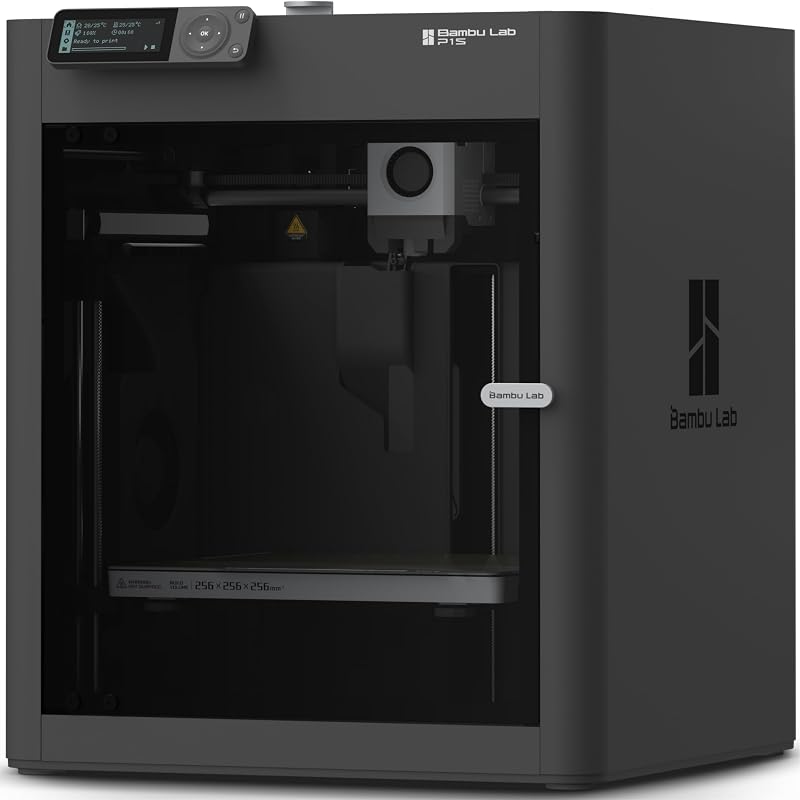
The Beginner-Friendly Ecosystem with MakerWorld Model presents the standalone Bambu Lab P1S enclosed CoreXY unit. This configuration appeals to hobbyists seeking an enclosed CoreXY high-speed platform with direct integration into MakerWorld software, offering an alternative ecosystem path for those focusing strictly on out-of-the-box cloud printing convenience.
Final Verdict
The ELEGOO Centauri Carbon represents a thoughtful shift toward heavy-duty, dependable desktop manufacturing for home users. By combining an integrated die-cast aluminum frame with high-speed CoreXY kinematics, an enclosed thermal chamber, and a 320°C hardened steel nozzle, ELEGOO has produced a printer that balances raw velocity with long-term mechanical reliability. It handles everyday PLA toys just as easily as it shapes rigid carbon-fiber functional parts.
For families, educators, and practical makers looking for an investment that eliminates the frustration of bed leveling, frame wobble, and constant tinkering, this machine delivers exceptional long-term utility. Its robust construction and automated calibration features make it a standout choice for anyone seeking a safe, durable, and highly capable additive fabrication tool for the home workshop.
FAQ
Does the ELEGOO Centauri Carbon require manual frame assembly?
No, the printer arrives fully assembled and pre-calibrated from the factory. Users only need to unbox the unit, remove protective internal packaging materials, plug it in, and complete the automated initial calibration routine displayed on the touchscreen.
What materials can the 320°C nozzle print?
The 320°C brass-hardened steel nozzle and enclosed chamber allow the machine to process standard filaments like PLA and PETG, as well as advanced composite materials such as carbon-fiber reinforced filaments that would abrade standard brass nozzles.
How does the die-cast frame improve print quality?
The unified die-cast aluminum frame provides an exceptionally rigid structure that dampens vibration when printing at speeds up to 500 mm/s. Combined with internal vibration compensation algorithms, it eliminates resonance ghosting and layer banding on finished prints.
Can I monitor prints when I am away from the printer?
Yes, the Centauri Carbon features a factory-installed chamber camera paired with dual LED lighting. This setup enables real-time visual monitoring, remote operational adjustments, and automatic time-lapse video generation.
What are the dimensions and weight of the machine?
The printer measures 15.67 inches deep, 15.9 inches wide, and 19.29 inches high, with a total net weight of 17.5 kg (approximately 38.58 lbs), requiring a stable, dedicated tabletop or workbench.


